
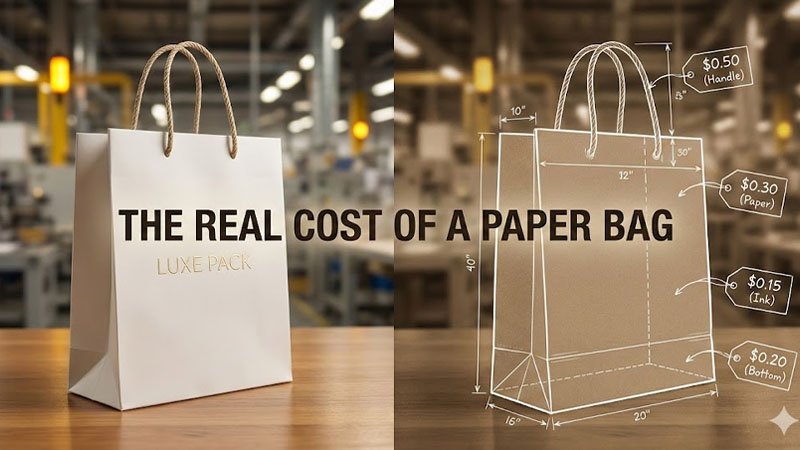
Ever quoted a “simple paper bag” only to feel like the final cost came out of a magic hat? You’re not crazy. Packaging pricing is a spiderweb of components — from raw materials to unexpected fees at customs.
Yes — the true cost of a paper bag involves more than paper and ink. Materials, printing techniques, labor, logistics, and even tariffs all play a role in your bottom line. The good news? When you understand what you’re paying for, you can negotiate smarter, budget better, and avoid costly surprises.
Let’s unpack the full lifecycle cost of a paper bag — from raw pulp to delivered pallet.
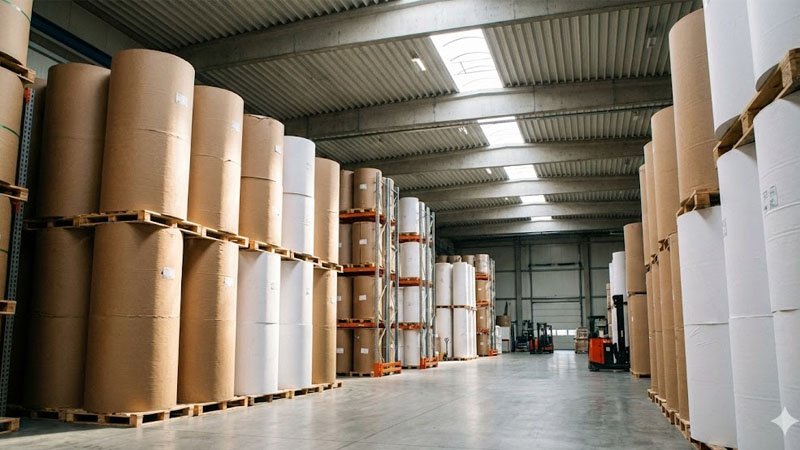
How Much Does Paper Actually Cost?
Let’s start with the obvious: paper.
Not all paper is priced equally. The cost depends on:
- Type: Kraft, white kraft, recycled, FSC-certified
- Weight: Measured in GSM (grams per square meter)
- Surface: Coated, uncoated, glossy, matte
- Certifications: FSC, FDA-approved, food-grade
For example, virgin white kraft paper can cost 30–50% more than brown recycled kraft. Add eco-certification, and your paper cost just got fancier.
On average, paper makes up 30–40% of the total bag cost. Here’s a detailed cost breakdown by paper type.
Why Printing Is the Hidden Cost Driver
Here’s where most people get surprised.
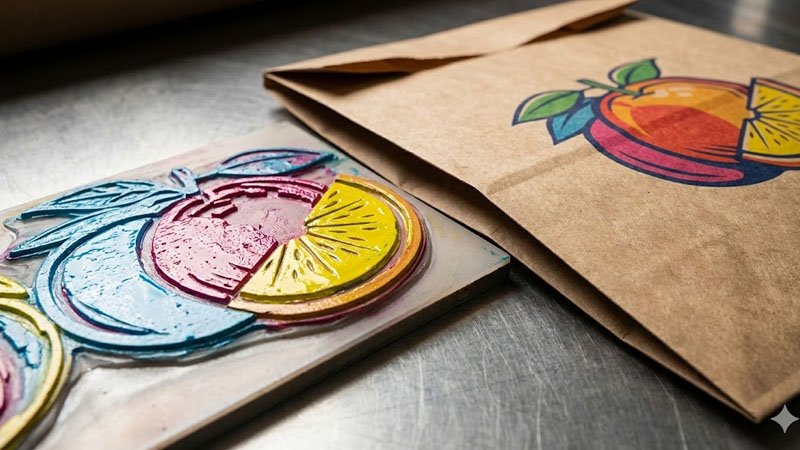
Your printing method matters a lot. The same bag can vary by $0.05–$0.20 per unit based on artwork demands.
Common printing methods:
- Flexo: Most common. Best for large volumes, limited colors. Cost-effective.
- Offset: Higher resolution, great for complex designs. Costs more.
- Gravure: Ultra high-quality, but requires expensive cylinders. Great for big brands.
- Digital: No plate fees, fast setup. Perfect for small runs, but higher per-unit costs.
Also, printing costs go up with:
- Number of colors
- Printing area size
- Special effects (hot stamping, UV, embossing)
At GreenWing, we help clients like Mike balance branding impact with production efficiency — because no one wants to spend $10,000 on a logo that prints on a bag that’s thrown away.
Labor and Machine Time: The Silent Cost Factor
People forget that bags don’t make themselves. Even with automation, there’s a cost attached to:
- Machine setup time
- Operator labor
- Quality control personnel
For example:
- Small bags may run faster = lower machine time
- Handheld twisted rope handles require manual gluing
- Custom windows, die-cuts, or inner lamination? More labor, more cost
In China, labor cost remains competitive, but it’s rising yearly. In fact, China’s manufacturing labor cost has grown over 15% in the last 5 years — and that affects your price per bag.
On average, labor and machine time make up 15–20% of the bag cost.
How Shipping Charges Creep Into Your Unit Price
Shipping is more than freight. It’s about volume, weight, destination, and fuel rates.
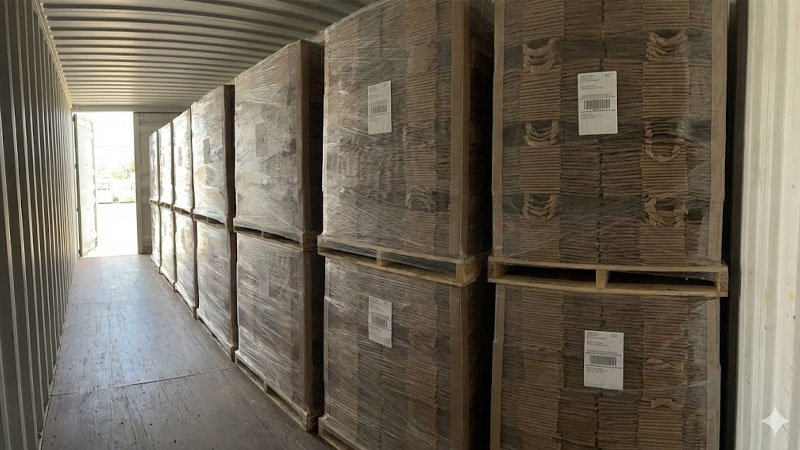
Paper bags are light but bulky — which means you pay for space, not weight. A single 40-foot container can hold around 400,000–500,000 small paper bags, but fewer if you’ve got heavy-duty or custom-sized bags.
Let’s break it down:
- Domestic Freight in China: Factory to port, especially if inland
- Export Ocean Freight: Priced per CBM or container
- Destination Charges: Duties, unloading, local delivery
- Fuel Surcharges & Seasonal Fluctuations: Holiday shipping = $$$
Example: In 2022, ocean freight from China to the U.S. West Coast spiked 5x due to port congestion. If you weren’t locked in with a trusted supplier (like us), your paper bag price jumped overnight.
Here’s a helpful freight rate trend tracker we use internally.
What About Import Tariffs and Customs Duties?
Ah yes, the part no one talks about — tariffs and duties.
If you’re importing to:
- USA: Most paper bags from China face duty rates of 5.7% to 20% depending on classification
- Europe: Duties vary but are usually 3–6%, plus VAT
- Canada & Australia: Generally lower, but you still need to check HS Codes carefully
Since the U.S.-China trade tensions, some paper bag types have been hit with additional tariffs (Section 301). If you’re not checking the latest HS code updates, you’re leaving your profit margins to chance.
We provide all clients with HS code classification and help calculate expected duty rates. Don’t get caught with surprise invoices.
Lifecycle Summary: What Goes Into the Price Per Paper Bag?
Let’s say you’re buying 100,000 printed paper bags from us.
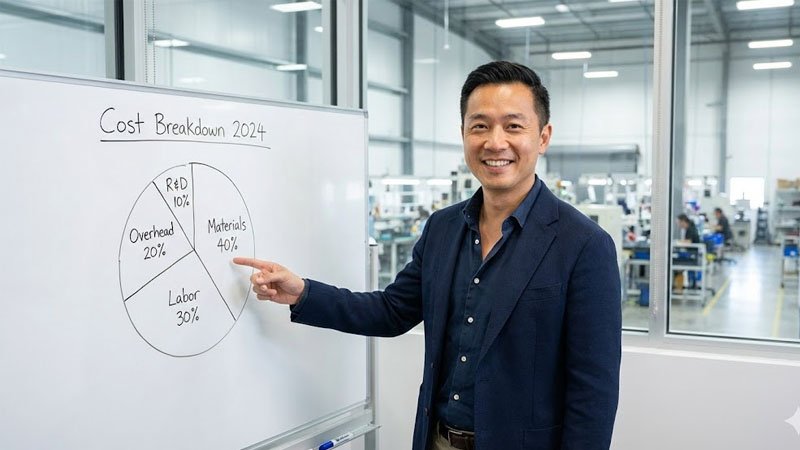
Here’s a realistic breakdown of what you’re paying per unit (example only):
| Cost Element | % of Total | Cost per Bag (USD) |
|---|---|---|
| Paper Material | 35% | $0.035 |
| Printing & Plates | 20% | $0.020 |
| Labor & QC | 15% | $0.015 |
| Overhead & Packaging | 5% | $0.005 |
| Shipping | 20% | $0.020 |
| Tariffs & Fees | 5% | $0.005 |
| TOTAL | 100% | $0.10 |
Multiply that by 100,000 — and you’re at $10,000 landed cost. Now you see why a “cheap” bag can become expensive if you don’t factor in the full lifecycle.
How to Reduce Your Costs Without Sacrificing Quality
You don’t have to cut corners to save money. You just have to make smart choices.
Here’s what I recommend:
- Choose optimal paper weight — not too thick, not too flimsy
- Limit ink coverage — less ink, less cost
- Batch orders for volume discount — MOQ = leverage
- Plan ahead for shipping — avoid peak surcharges
- Let us handle compliance — saves you time and audit fees
At GreenWing, we help clients run simulations: “What if we reduce the bag size 10%?” or “What if we switch from offset to flexo printing?” We’re not just your factory — we’re your CFO’s new best friend.
Conclusion
A paper bag might look simple, but its price tag is anything but. From raw materials and printing to shipping logistics and government tariffs — every layer affects your cost.
The smarter you are about the full lifecycle, the better your margins, and the fewer surprises you’ll face.
Let’s build your next bag — beautifully designed, fully compliant, and cost-optimized from day one.




 EN
EN NL
NL SV
SV AF
AF KO
KO RO
RO DE
DE IT
IT JA
JA HU
HU ES
ES FR
FR PL
PL PT
PT DA
DA AR
AR HI
HI PA
PA ID
ID RU
RU EL
EL TH
TH TR
TR