
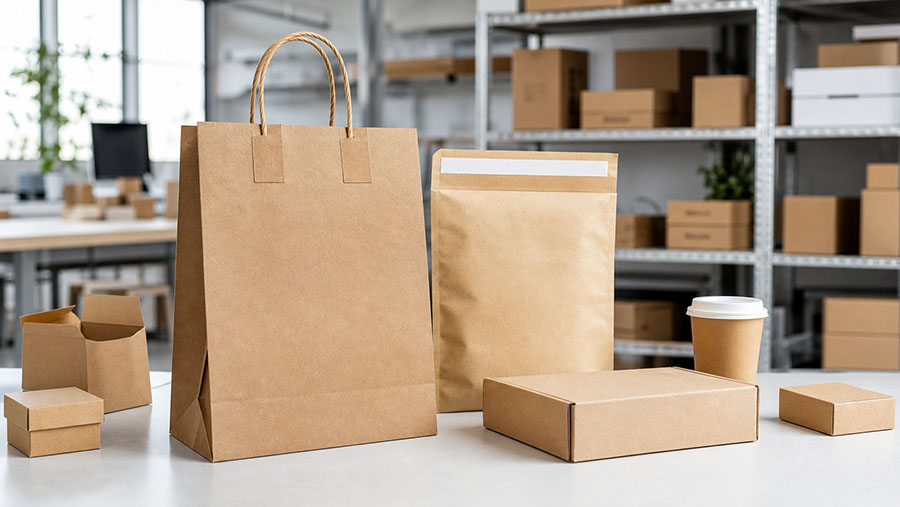
Paper bag durability is not only about how much weight a bag can hold on a test bench. In retail and e-commerce, durability depends on how the paper, handle, bottom fold, glue line, and moisture exposure behave during repeated handling.
For most retail and e-commerce uses, a durable paper bag is one that keeps its shape, handle strength, and bottom support through packing, carrying, storage, and short-distance delivery without tearing at the weakest point.
Executive Summary
- Paper bag durability is usually decided by the weakest structure, not the paper sheet alone. Handles, bottom reinforcement, side gussets, and glue lines often fail before the main paper panel.
- Retail bags and e-commerce bags need different strength logic. A shopping bag must survive hand-carrying and brand presentation; an e-commerce paper bag must survive stacking, rubbing, sealing, and courier handling.
- Moisture changes the durability calculation. Kraft paper and coated paper bags can perform well in dry use, but wet handling, chilled products, and rainy delivery conditions need extra material or coating decisions.
What Does Paper Bag Durability Mean for Retail and E-commerce?
Paper bag durability means the bag can carry its intended load and survive the real handling route without tearing, deforming, or losing closure. In retail, that route may be counter packing → customer carrying → home storage. In e-commerce, it may be warehouse packing → stacking → courier sorting → last-mile delivery.
That is why a simple “paper GSM” number is not enough.
A 180 gsm paper shopping bag with weak handle reinforcement can fail faster than a 140 gsm bag with better rope fixing, bottom cardboard, and glue control. For heavier or repeated-use applications, reinforced paper bags are usually more reliable than simply increasing paper thickness. In production, the bag behaves as a structure. The paper is only one part of it.
For buyers, the useful question is not “Is paper strong?” The useful question is:
Where will the bag be stressed, and what must not fail first?
Which Parts Decide Paper Bag Durability?
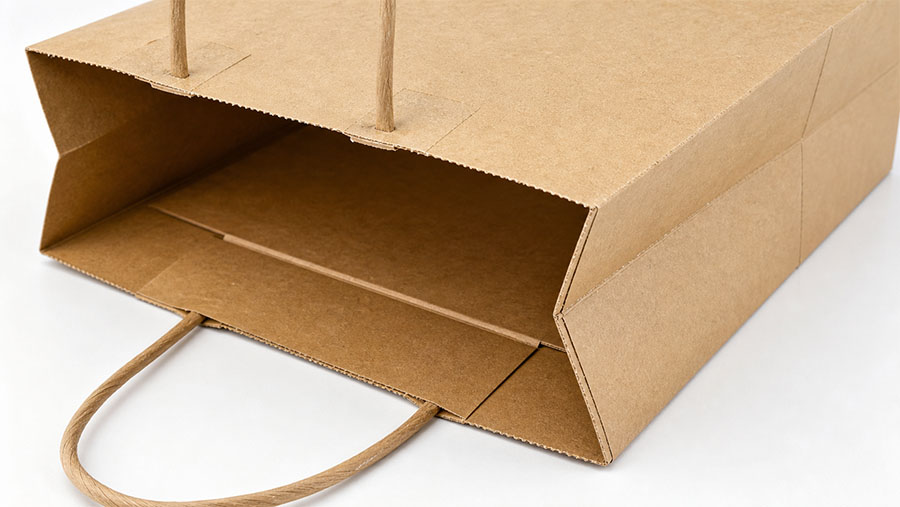
The main durability points are paper strength, handle strength, bottom structure, fold resistance, glue stability, and moisture resistance.
| Durability factor | Where it shows up | Common weak point | What buyers should specify |
|---|---|---|---|
| Paper GSM and grade | Main body strength and shape | Panel tearing or wrinkling | Kraft / white kraft / art paper, GSM range, recycled content if required |
| Handle structure | Carrying and lifting | Handle pull-out, hole tearing, knot slipping | Twisted paper handle, rope handle, flat handle, reinforced patch |
| Bottom reinforcement | Heavy or box-shaped products | Bottom sagging or glue opening | Bottom board, bottom width, load target |
| Side gusset and folds | Volume expansion | Cracking at fold lines | Bag size, gusset width, packed product shape |
| Glue and sealing | Bottom and side bonding | Seam opening under load | Glue type and quality inspection standard |
| Coating or lamination | Moisture and abrasion | Wet strength loss, surface scuffing | Water resistance level, recyclability target, finish requirement |
Paper bags often fail at the transition points: handle holes, folded corners, bottom seams, and glued joints. Those areas receive concentrated stress. If the product is heavy, sharp-edged, chilled, or frequently handled, the specification needs to protect those points first.
How Much Weight Can a Retail Paper Bag Hold?
A retail paper bag can often be designed for light, medium, or heavy carrying loads, but the exact capacity depends on size, paper grade, handle type, bottom structure, and paper and paperboard tensile test methods. Do not rely on GSM alone.
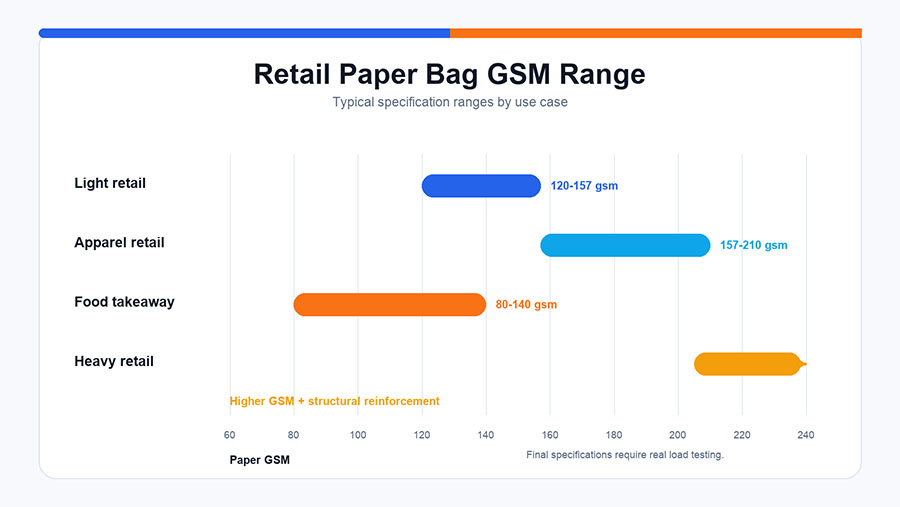
A practical purchasing range looks like this:
| Use case | Typical products | Common specification direction | Durability concern |
|---|---|---|---|
| Light retail | Cosmetics, accessories, small gifts | 120–157 gsm paper, simple handle | Shape retention and print appearance |
| Apparel retail | Clothing, shoes, branded merchandise | 157–210 gsm paper, reinforced handle area | Handle pull-out and side-gusset stress |
| Food takeaway | Bakery, coffee, light meals | 80–140 gsm kraft paper, flat or twisted handle | Bottom support, oil/moisture exposure |
| Heavy retail | Bottles, books, boxed goods | Higher GSM, bottom board, stronger handle fixing | Bottom sagging and handle tear |
| Promotional / event bags | Mixed samples or giveaways | Medium GSM with reinforced structure | Unpredictable load and repeated carrying |
The number that matters is not just the finished bag’s “rated weight.” It is how that rating was tested.
For example, a bag may hold a static load in a sample room. But in actual use, the customer lifts it, swings it, sets it down, picks it up again, and may carry it in rain or humid weather. That repeated movement changes the risk.
This is where buyers often underestimate paper bags. They compare static load claims, but the failure happens during motion.
Why Do Handles Fail Before the Paper Body?
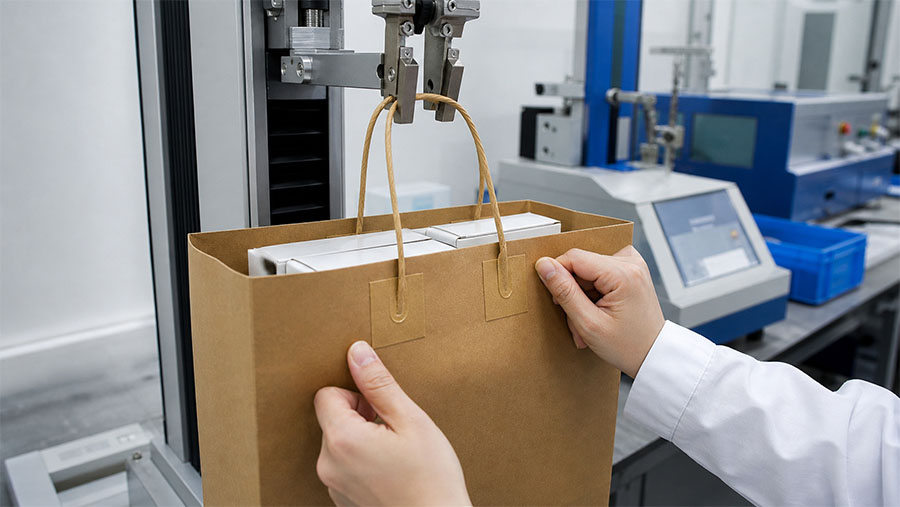
Handles fail first because they concentrate force into a small area. When a customer lifts the bag, the full load pulls through the handle hole, patch, knot, or glued handle base.
In production and sampling, handle strength should be treated as its own durability point. It is not automatically solved by choosing thicker paper.
Common handle options include:
Vridna pappershandtag
Twisted handle paper bags are widely used for kraft paper shopping bags and takeaway bags. They are cost-effective and recyclable in many paper-based packaging systems, depending on local recycling rules and any added coating or ink.
They work best for light to medium loads. For heavier products, the handle attachment area needs reinforcement.
Rope Handles
Rope handles are common for premium retail bags. They improve carrying comfort and presentation, but they may need reinforced holes, washers, or stronger paper around the opening.
The trade-off is cost and material complexity. If recyclability is a strict requirement, mixed-material handles should be checked against the market’s disposal and recycling expectations.
Platta pappershandtag
Flat handle paper bags are common for grocery, takeaway, and delivery bags. They are easy to stack and practical for volume orders.
The weak point is usually the pasted handle area. If the adhesive or contact area is insufficient, the handle may peel before the paper tears.
How Does E-commerce Handling Change Paper Bag Durability?
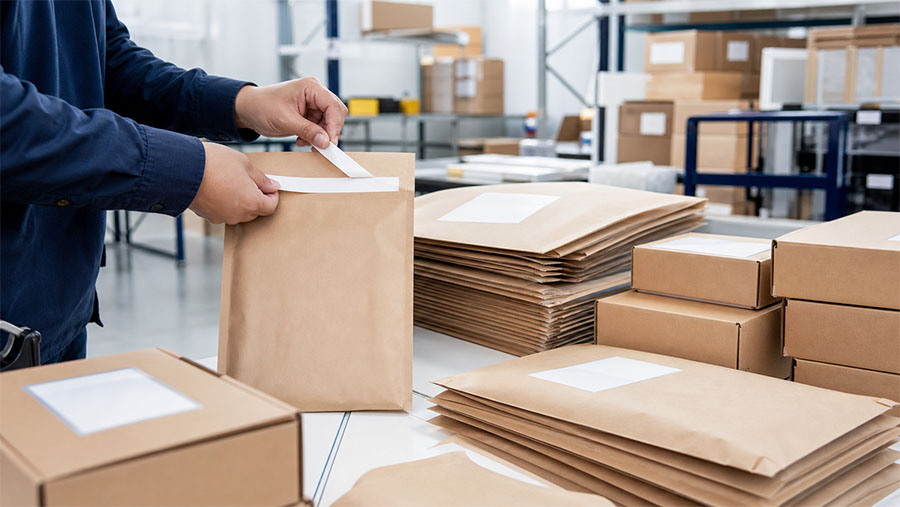
E-commerce handling changes the durability requirement from “carry strength” to “transport survival.” The bag may be compressed, rubbed, stacked, sealed, labeled, and passed through several handling points before the customer sees it.
For e-commerce paper packaging, durability depends more on these conditions:
| E-commerce condition | What it does to the bag | Specification implication |
|---|---|---|
| Stacking in cartons or bins | Compresses folds and corners | Choose stronger paper and stable bag geometry |
| Conveyor and courier handling | Creates abrasion and rubbing | Consider surface finish and scuff resistance |
| Labeling and sealing | Adds stress when opened | Plan adhesive strip, tear strip, or closure method |
| Mixed product shapes | Creates point pressure | Avoid sharp corners or add inner protection |
| Weather exposure | Weakens paper if wet | Consider coating, inner liner, or waterproof outer packaging |
A retail paper shopping bag is usually open-top and presentation-driven. An e-commerce paper bag often needs closure and protection. If the same bag is used for both, one side of the requirement is usually compromised.
That does not mean one bag cannot serve both uses. It means the design needs a clear priority.
Vad händer när papperspåsar blir blöta?
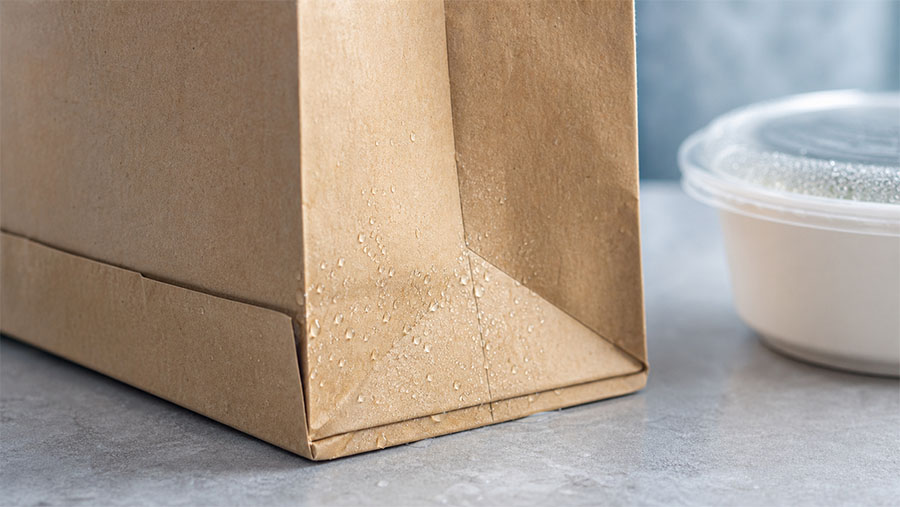
Paper loses strength when wet because water weakens the bonding between fibers. This is one reason public environmental discussions often mention that paper bags may need multiple uses to offset production impact, but many standard paper bags do not survive repeated wet or heavy use well. Penn State researchers have also noted that paper bags have short lifespans partly because of low durability when wet, and studied methods to improve wet tensile strength. Penn State
For retail and e-commerce buyers, the practical point is simple: buyers should understand how humidity affects paper bag durability before confirming coating, material, or testing requirements.
Moisture can come from:
- Rain during last-mile delivery
- Chilled or frozen products
- Condensation from drinks or food
- Humid storage conditions
- Wet warehouse floors or delivery bins
Coating or lamination can improve water resistance, but it also changes cost, appearance, feel, and återvinningsbarhet. This is a trade-off, not a free upgrade.
Which Paper Bag Structure Works Best for Retail?
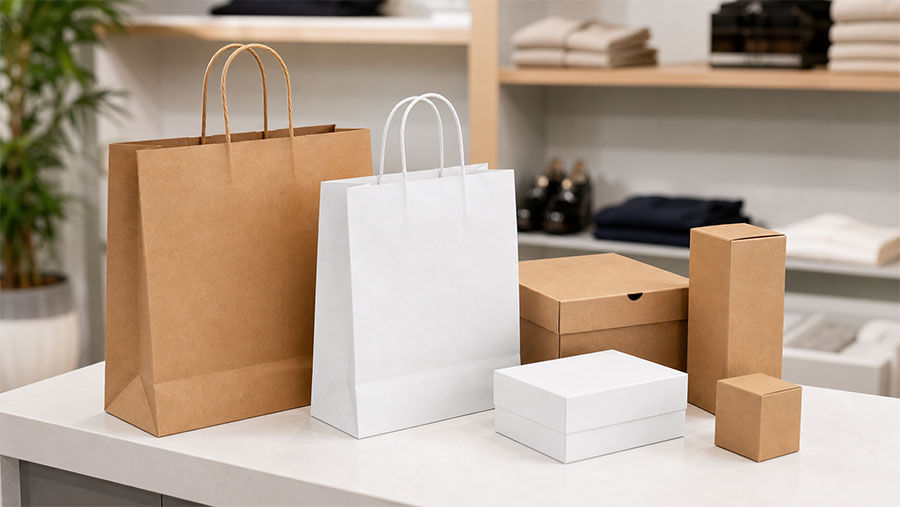
For retail, the best structure usually balances strength, print appearance, and carrying comfort.
A practical structure for branded retail packaging often includes:
- Kraft paper or white kraft paper in the correct GSM range
- Reinforced handle area for apparel, shoes, boxed goods, or bottles
- Bottom board for heavier products
- Side gusset sized to the product depth
- Matte, gloss, or uncoated finish based on brand presentation
- Handle type selected by load, cost, and brand feel
For fashion, cosmetics, gifts, and boutique retail, the bag is also part of the customer’s brand experience. But the durability still needs to match the product. A premium-looking bag that tears at the handle creates a worse impression than a simpler bag with the right reinforcement.
Which Paper Bag Structure Works Best for E-commerce?
For e-commerce, the best structure depends on whether the paper bag is the primary shipping package or an inner retail bag inside another carton or mailer.
| E-commerce role | Suitable direction | What to check |
|---|---|---|
| Inner brand bag | Retail-style paper bag inside a shipping carton | Print appearance, handle, folding, customer unboxing |
| Delivery / takeaway bag | Paper carry bag used for local delivery | Bottom strength, handle adhesion, moisture exposure |
| Paper mailer or courier bag | Outer shipping package | Closure, tear resistance, puncture risk, label adhesion |
| Protective paper bag | Bag used with inner wrapping or cushioning | Product edges, rubbing, compression |
For an express paper bag or courier-style e-commerce packaging, paper durability must be considered with the whole packing system. A paper bag alone is not always suitable for sharp-edged, fragile, heavy, or moisture-sensitive products.
This is where overspecification and underspecification both cost money. Too little strength leads to damage and complaints. Too much material increases unit cost, shipping weight, and storage volume.
Use the handle-strength comparison to shortlist fixing and handle options, then validate the assembled bag under the carrying conditions defined here. For the wider product-fit decision, return to the bag selection guide.
How Should Buyers Test Paper Bag Durability Before Bulk Production?
Buyers should test paper bag durability against the real handling route, not only against a sample-room load.
A practical pre-production test can include:
| Test item | What it checks | How to make it realistic |
|---|---|---|
| Static load test | Basic carrying capacity | Load the bag to target weight and observe bottom/handle stress |
| Lift and swing test | Dynamic handle stress | Lift repeatedly and swing gently to simulate customer movement |
| Drop / set-down test | Bottom and corner strength | Place loaded bag down repeatedly on a hard surface |
| Moisture exposure check | Wet strength behavior | Test with chilled products, condensation, or light water exposure if relevant |
| Packing simulation | E-commerce handling | Stack, label, seal, and move bags as the warehouse would |
| Print rub check | Surface durability | Rub printed areas against cartons or other bags |
The best test is not complicated. It is honest.
If the bag will carry two glass bottles, test it with two glass bottles. If it will hold a takeaway meal with condensation, test it with warm food and realistic waiting time. If it will pass through courier handling, test it with the label, closure, and outer packing method.
What Specifications Should You Send for a Durable Paper Bag RFQ?
For a durable retail or e-commerce paper bag quote, send the supplier the product, load, size, usage route, and printing requirements. Without those details, the supplier can only guess.
A useful RFQ should include:
- Bag type: shopping bag, takeaway bag, flat-bottom paper bag, square-bottom bag, paper mailer, or custom structure
- Bag size: width × gusset × height
- Product type and packed weight
- Expected carrying weight or load target
- Handle type: twisted paper, flat paper, rope, die-cut, or no handle
- Paper material and GSM preference, if known
- Bottom reinforcement requirement
- Printing method and color requirement: flexo, offset, CMYK, Pantone
- Surface finish: uncoated, matte, gloss, lamination, coating
- Moisture exposure: none, light, chilled product, outdoor delivery
- Market requirement: FSC chain of custody, recycled content, food contact substances, or other compliance needs
- Order quantity, delivery destination, and target launch date
If the bag is for food, takeaway, or direct contact packaging, food-contact requirements need to be confirmed separately. If the bag is for sustainability claims, certifications and material claims should be verified before printing them on the bag.
When Is a Stronger Paper Bag Worth the Extra Cost?
A stronger paper bag is worth the extra cost when failure would affect product protection, brand trust, or customer complaints more than the material saving.
In practice, higher strength is easier to justify when:
- The product is heavy, boxed, or sharp-edged
- The customer carries the bag for a long distance
- The bag is used for premium retail presentation
- The bag may face rain, condensation, or humidity
- The same bag is used for both store pickup and delivery
- The brand wants customers to reuse the bag
- The cost of damage, replacement, or complaint handling is high
It is harder to justify when the bag is used only for very light goods, short-distance handover, or inner packaging that receives little stress.
The decision should be made from the use route, not from the catalog photo.
FAQ
Are paper bags durable enough for retail?
Yes, paper bags can be durable enough for retail when the paper GSM, handle fixing, bottom structure, and product weight are matched correctly. The common mistake is choosing by appearance first and testing strength later.
Are paper bags suitable for e-commerce shipping?
Paper bags can work for some e-commerce uses, especially light products, local delivery, or inner brand packaging. For heavy, sharp, fragile, or moisture-sensitive products, the whole shipping system needs to be checked before using paper as the outer package.
Does thicker paper always make a stronger bag?
No. Thicker paper can improve stiffness and body strength, but handle attachment, bottom glue, folds, and reinforcement often decide real durability. A balanced structure usually performs better than paper thickness alone.
How do I avoid paper bag tearing?
Start by identifying the stress point: handle, bottom, side gusset, fold, or moisture exposure. Then adjust the structure, reinforcement, paper grade, and testing method around that specific risk.
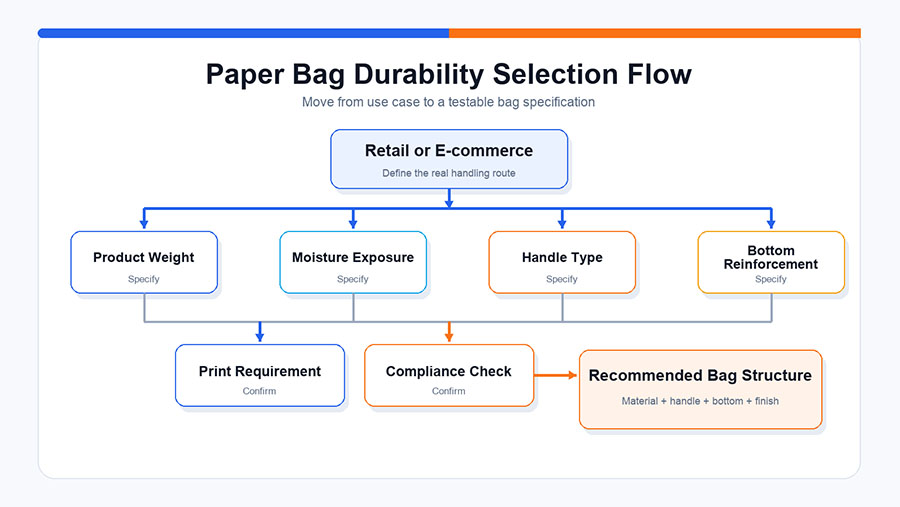
Before a production order, request a sample for the intended load and handling route. Include the packed weight, bag dimensions, moisture exposure and the failure criteria you want the sample to be checked against.
The Practical Boundary
Paper bags can be strong, professional, and suitable for retail and selected e-commerce applications. But they are not automatically durable because they look thick or carry an “eco” message.
Durability has to be engineered into the structure: paper grade, handle design, bottom support, glue control, moisture protection, and testing.
For a reliable specification, the next step is not to ask for “a strong paper bag.” The next step is to define the product weight, bag size, carrying route, moisture exposure, print requirement, and order volume. Those details decide whether the right solution is a simple kraft shopping bag, a reinforced retail bag, a takeaway delivery bag, or a different paper-based packaging structure.