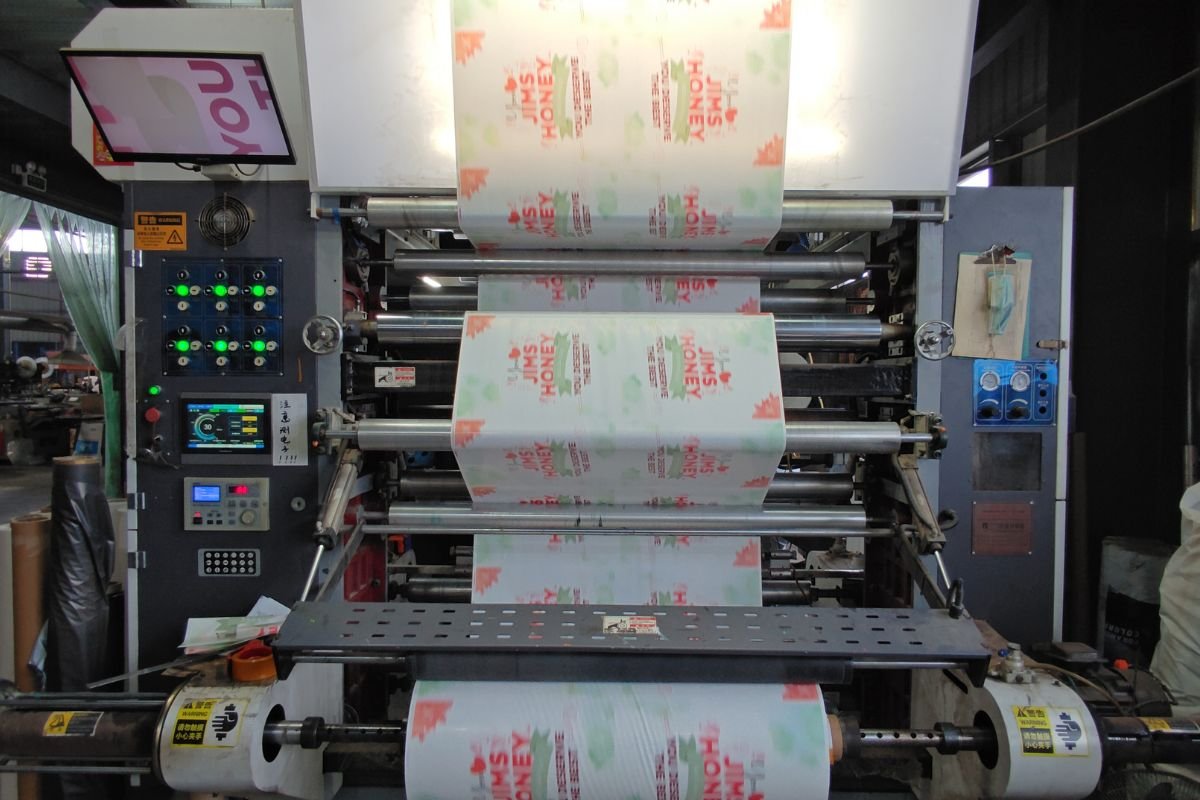
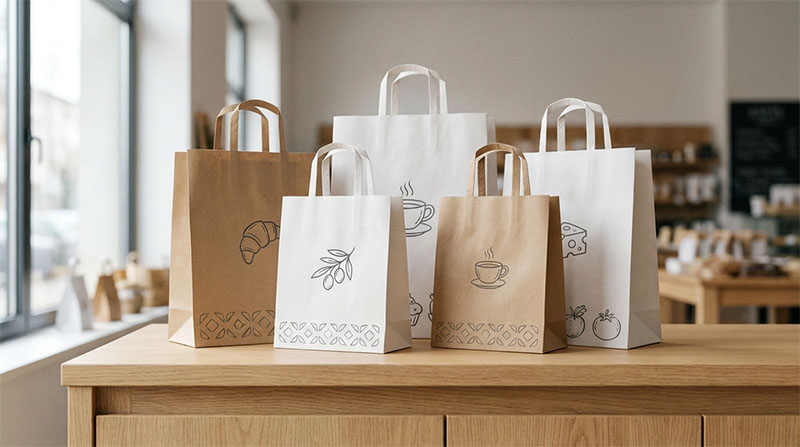
Your paper bag can carry a product. Or it can carry a story. Many brands spend money on packaging, then leave the artwork looking flat, generic, or painfully forgettable. That is the problem. Custom artwork on paper bags solves it by turning plain packaging into a walking brand canvas.
Custom artwork on paper bags helps brands express personality, improve shelf appeal, and create a more memorable customer experience. With the right illustration style, file preparation, color control, and printability checks, a paper bag can become more than a container. It can become brand media. At GreenWing, we help B2B buyers turn illustrations into practical, printable, durable packaging that works on kraft paper, white paper, food bags, retail bags, and takeaway packaging.
I have seen a simple line drawing make a bakery bag feel handmade. I have also seen a beautiful illustration become a muddy brown mystery after printing. Good artwork is not just pretty. It must survive paper, ink, folding, glue, and real-world hands.
What Is Custom Artwork on Paper Bags?
Custom artwork on paper bags means using original visual assets on the bag surface. This can include hand-drawn illustrations, brand characters, patterns, seasonal graphics, product sketches, food drawings, maps, icons, storytelling scenes, or artistic backgrounds.
It is different from simple logo printing.
A logo says, “This is my brand.”
An illustration says, “This is my world.”
That difference matters. Especially for food brands, fashion retailers, gift companies, cosmetics brands, and lifestyle products. Customers do not always remember a bag size. They remember a feeling.
Custom illustrated paper bags can make a brand feel warm, premium, playful, natural, local, artistic, or bold. The artwork gives the bag a voice. Hopefully not a shouting voice. Nobody needs a paper bag yelling at them before coffee.
For broader design choices, you can explore our paper bag customization options.
Why Do Brands Use Custom Illustrated Paper Bags?
Brands use custom illustrated paper bags because illustration creates recognition. A strong illustration style can make packaging easier to notice, remember, and share.
In retail, customers see many products and many bags. A custom illustration helps the bag stand apart from standard printed packaging. It also makes the packaging feel more intentional.
For a bakery, illustrated wheat, ovens, bread, or local streets can create a handmade feeling. For a coffee brand, line art of beans, farmers, cups, or brewing tools can tell a sourcing story. For a cosmetics brand, botanical drawings can support a natural product position.
This is why brand illustration on paper packaging bags is not just decoration. It is positioning.
How Is Illustration Different from Logo Printing?
Logo printing is usually simple. It focuses on brand identification. Illustration printing is more complex because it often includes more lines, textures, colors, and storytelling elements.
A logo may need one or two colors.
An illustration may need fine lines, shadows, gradients, patterns, or multiple color layers.
That means we must review printability more carefully.
Some illustrations look excellent on a computer screen but become weak on paper. Thin lines may disappear. Small details may fill in. Gradients may band. Low-contrast colors may look dull on kraft paper.
I like beautiful design. But I like printable design more.
A designer may say, “This texture is subtle.”
A printer may say, “This texture has left the building.”
That is why artwork guidelines for paper bag design are important. They help protect the creative idea during production.
What Artwork Files Are Best for Paper Bag Illustration Printing?
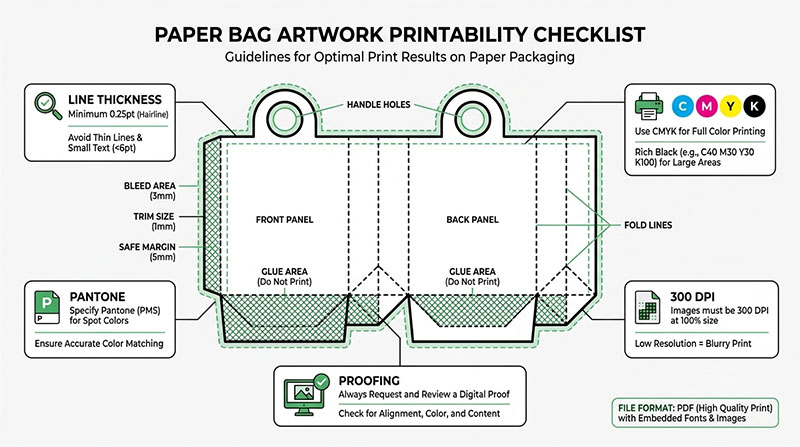
For paper bag illustration printing, vector files are usually best. Common formats include AI, PDF, EPS, and SVG. Vector artwork can scale without losing quality, which is useful for large bag panels and repeat patterns.
For raster images, such as hand-painted artwork or detailed textures, high-resolution files are needed. Usually, 300 DPI at final print size is a safe starting point. Lower resolution may cause blurry edges or pixelated details.
We also need editable layers when possible. This helps adjust colors, separate print areas, and prepare dielines.
Here is what we usually request from buyers:
- AI, PDF, or EPS files for vector artwork
- 300 DPI images for raster artwork
- CMYK color mode for print preparation
- Outlined fonts
- Embedded or linked images included
- Clear dieline with bleed area
- Pantone color references if brand colors are strict
- Mockup showing artwork placement
Do not send a screenshot from a phone and call it final artwork. That is not a file. That is a cry for help.
What Are the Key Artwork Guidelines for Paper Bag Design?
Artwork guidelines for paper bag design protect the final result. They make sure the illustration fits the bag structure and printing process.
First, we need bleed. Bleed is the extra artwork area beyond the cut line. It prevents white edges after cutting or folding.
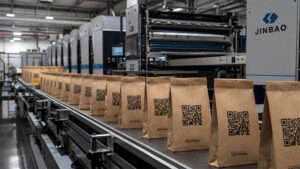
Second, we need safe margins. Important text, faces, QR codes, or small icons should not sit too close to fold lines, glue areas, handle holes, or bottom creases.
Third, we need proper line thickness. Very thin lines may disappear, especially on kraft paper or textured paper.
Fourth, we need color control. Screen colors are not print colors. RGB colors can look bright on a monitor but dull after CMYK conversion.
Fifth, we need scale testing. A pattern that looks elegant on a laptop may look too busy on a small takeaway bag.
Paper bags are three-dimensional. The front panel, side gussets, back panel, and bottom all affect the artwork. If the illustration crosses a fold, we must plan it carefully.
I always remind customers: the bag is not a poster with handles. It is a folded object with attitude.
How Does Kraft Paper Affect Custom Artwork?
Kraft paper gives packaging a natural, eco-friendly look. It is popular for food, coffee, bakery, takeaway, and lifestyle brands.
But kraft paper changes color appearance.
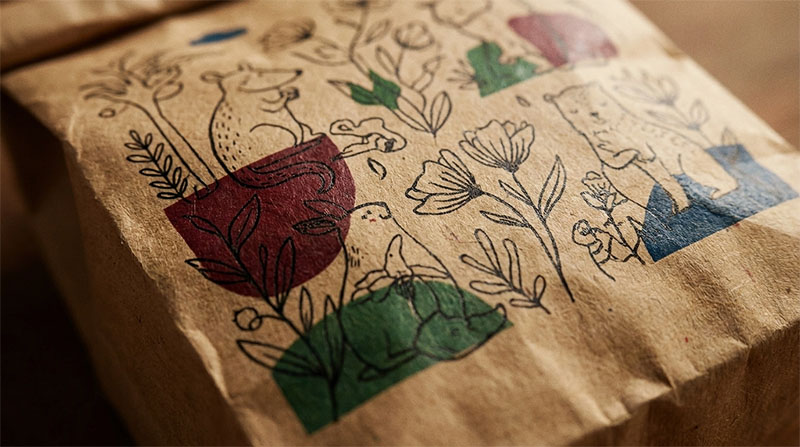
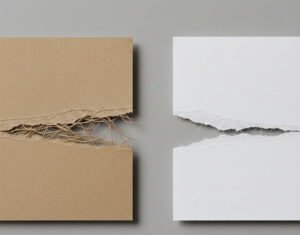
Because kraft paper is brown, ink colors may look darker, warmer, or less bright. White areas in the artwork will not appear white unless white ink is printed. Light yellow, pale pink, beige, and soft gray may lose contrast.
Black line art works well on kraft paper. Dark green, dark blue, burgundy, and deep brown can also look strong. Large solid colors can work, but we need to check ink coverage and drying.
If a brand wants bright illustration colors, white paper may be better. Or we can print a white ink base under selected areas. That can improve color brightness, but it adds cost and production complexity.
Kraft paper is honest. It tells the truth about color. Sometimes too much truth.
How Does White Paper Improve Illustration Printing?
White paper gives artwork a cleaner and brighter base. It is better for detailed illustrations, soft colors, gradients, watercolor effects, and premium retail designs.
If your brand illustration uses many colors, white paper usually gives more accurate results.
White kraft paper, white card paper, and coated paper can all support different visual effects. A smooth white surface helps fine lines stay sharp. It also helps pastel colors, skin tones, product drawings, and complex patterns look cleaner.
This is why many cosmetics, fashion, gift, and premium food brands prefer white paper for illustrated packaging.
However, white paper can show dirt and handling marks more easily than brown kraft paper. It may also feel less natural if the brand wants a rustic or eco-friendly image.
So the choice is not “which paper is best?”
The better question is, “Which paper fits the artwork and brand feeling?”
What Illustration Styles Print Best on Paper Bags?
Some illustration styles are more print-friendly than others.
Line art is one of the safest choices. It works well on kraft paper and white paper. It is clean, elegant, and cost-efficient when printed in one color.
Flat vector illustration also works well. Large color blocks are easier to control than tiny textures.
Pattern illustration is excellent for retail bags. Repeating icons, flowers, food items, animals, or brand symbols can create strong recognition.
Vintage engraving style can look premium, especially for coffee, tea, wine accessories, bakery, and handmade products. But the line density must be checked.
Watercolor illustration can look beautiful, but it needs high-resolution files and careful color proofing.
Gradient-heavy artwork can be risky on some paper and printing methods. It may show banding or uneven transitions.
Tiny details are also risky. If the customer needs a magnifying glass, the design is not charming. It is homework.
What About Licensing and Copyright for Brand Illustration?
Licensing matters. A lot.
If a brand uses artwork on paper bags, it must have the legal right to print and distribute that artwork. This includes illustrations, fonts, icons, stock graphics, characters, and patterns.
Some licenses allow digital use but not packaging use. Some allow small quantities but not mass production. Some require attribution. Some do not allow modification.
For wholesale packaging, this is serious because production quantities can be large. A small licensing mistake can become an expensive problem.
At GreenWing, we are not a law firm. My legal wig is still in the mail. But we always remind buyers to confirm artwork ownership before production.
Brands should check:
- Who created the illustration
- Whether the rights are exclusive or non-exclusive
- Whether packaging use is allowed
- Whether commercial use is allowed
- Whether modification is allowed
- Whether global distribution is allowed
- Whether there are quantity limits
- Whether fonts are licensed for print use
If the artwork is created by an agency or freelancer, the brand should keep written permission and source files.
How Do We Check Printability Before Mass Production?
Printability checks help avoid expensive surprises.
First, we review the artwork file. We check resolution, color mode, line thickness, bleed, safe margins, dieline position, and font outlines.
Second, we check the bag structure. The artwork must work with the front panel, side gussets, bottom fold, handle area, and glue area.
Third, we check the material. Kraft paper, white paper, coated paper, and food-grade paper all print differently.
Fourth, we make a digital proof or physical sample. A physical sample is best when the artwork has detailed illustration, special colors, or strict brand requirements.
Fifth, we test the result. We look at color, sharpness, registration, folding, rubbing, and overall appearance.
This step saves money. It also saves emails. Many emails.
For B2B buyers, sample approval is not a delay. It is insurance.
If you skip testing, the production line may still run beautifully. It may just run beautifully in the wrong color.
Which Paper Bag Types Work Well with Custom Illustrations?
Many paper bag types can work with custom illustrations, but each one has different strengths.
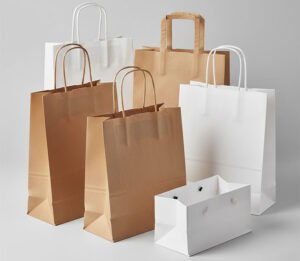
Handheld paper bags are great for retail, fashion, gifts, cosmetics, and events. They provide large front and back panels for artwork.
Square-bottom paper bags work well for food, coffee, bakery, and takeaway products. They stand well and can show patterns clearly.
Flat-bottom paper bags are useful for food packaging and shelf display. Illustration can help create strong product identity.
Courier paper bags can use illustration for e-commerce branding, unboxing experience, return instructions, or customer messages.
Takeaway paper bags can use fun drawings, food icons, seasonal artwork, or loyalty prompts.
Food packaging bags can use ingredient illustrations, flavor drawings, recipe icons, or origin stories.
At GreenWing, we produce handheld, square-bottom, flat-bottom, courier, food packaging, and takeaway paper bags. That gives buyers flexibility when matching illustration style with product use.
A luxury perfume bag and a fried chicken takeaway bag should not wear the same outfit. Unless the chicken is extremely confident.
How Can Custom Artwork Support Brand Storytelling?
Brand illustration on paper packaging bags can tell stories quickly.
A map can show local roots.
A farm drawing can show ingredient origin.
A character can create emotional connection.
A pattern can build recognition.
A seasonal illustration can support holiday sales.
A process drawing can explain how the product is made.
This is especially useful when the customer does not have time to read long text. A good illustration communicates in seconds.
For food brands, artwork can show freshness, craft, flavor, and tradition. For cosmetics, it can show nature, science, elegance, or care. For fashion, it can show lifestyle and attitude.
Illustration can also make packaging more shareable. Customers are more likely to photograph packaging that feels unique. That gives brands extra exposure without buying another ad.
I like that kind of math.
How Does GreenWing Help with Custom Illustrated Paper Bags?
At GreenWing, we help buyers move from artwork idea to finished paper bag.
We review files, check printability, suggest materials, prepare samples, support customization, and manage production. Since 2008, we have worked with wholesale buyers, importers, distributors, brand manufacturers, and food brands that need reliable paper packaging from China.
Our factory covers 50,000 square meters, with a 20,000 square meter warehouse. We have over 100 advanced machines, more than 300 staff, and a daily output of around 5 million bags. We also hold over 40 national patents and 60 qualifications and honors.
But numbers alone do not print a beautiful illustration.
Details do.
The right file. The right paper. The right color setup. The right sample. The right inspection. The right shipment schedule.
That is how we help buyers avoid the classic packaging nightmare: beautiful design, terrible production, late delivery, and a sales team saying, “Please understand.”
I understand. That is why we plan better.
What Should Buyers Prepare Before Requesting a Quote?
Before requesting a quote for custom artwork on paper bags, buyers should prepare clear project details.
This helps us quote faster and more accurately.
Please prepare:
- Bag type
- Ukuran tas
- Paper material
- Paper thickness
- Handle type
- Printing colors
- Artwork files
- Quantity
- Food contact requirements if needed
- Surface finishing
- Packing method
- Destination country
- Delivery timeline
- Certification requirements
If the illustration is not finished yet, that is okay. We can still discuss the structure and production direction. But final pricing may depend on artwork complexity, color count, material, and finishing.
The more complete the information, the fewer surprises later.
And in packaging, fewer surprises usually means everyone sleeps better.
Kesimpulan
Custom artwork on paper bags can make packaging more memorable, emotional, and brand-focused. The best results come from good files, clear licensing, suitable paper, and careful printability checks. At GreenWing, we help brands turn illustrations into practical, beautiful, wholesale-ready paper packaging.