
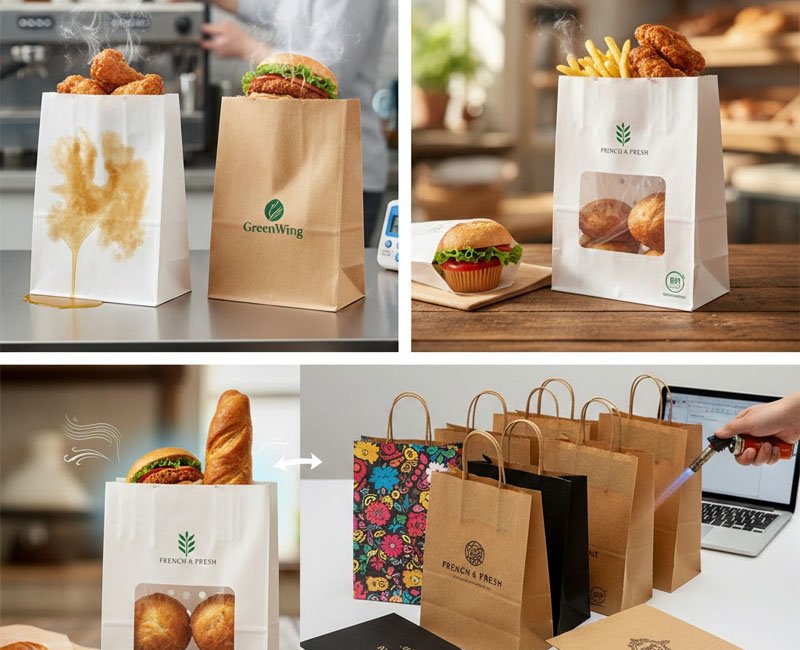
Your croissant deserves a red carpet — not a soggy bottom. If your food bags are leaking oil, wilting under steam, or turning into mini saunas during delivery, then your packaging isn’t doing its job. I’ve seen it all — and solved it all.
To win in the food delivery and bakery game, your paper bags need more than just a logo. They need science-backed protection: grease resistance to stop leaks, heat resistance to survive hot contents, and anti-condensation design to keep things fresh, not soggy.
Most customers don’t realize it’s the bag that ruined their fries. But you do — that’s why you’re here.
Why Grease Resistance Is Non-Negotiable for Food Paper Bags?
Grease is the silent killer of packaging.
Hot, oily food will soak through standard paper like it’s not even there.
At GreenWing, we engineer our food-grade bags with a special grease-resistant coating — invisible, food-safe, and non-toxic. No nasty PFAS here. Just clean barrier tech that keeps oil where it belongs.
We test bags with simulated high-oil content (think: chicken wings at 80°C) and monitor for penetration over time. The right coating resists both animal fats and plant-based oils.
Key materials we use:
- Glassine paper (naturally grease-resistant)
- PLA-coated kraft
- Water-based barrier coatings (eco-friendly and compostable)

Heat Resistance: Can Your Bag Handle the Heat?
If your customer’s burger burns through the bottom of the bag — we’ve got a problem.
Most food is packed hot — straight from fryer or oven. The bag must endure heat without softening, tearing, or releasing chemicals.
At GreenWing, we use high-grammage kraft (usually 80gsm–120gsm) that can withstand up to 120°C double-layer construction for heavier foods.
Design tips for heat-handling bags:
- Reinforced bottoms
- Folded edges (instead of glued ones that melt)
- Breathable micro-perforation zones to release excess steam
And yes — we test these under real restaurant conditions. I’ve personally torched a few prototypes just to be sure.

Anti-Condensation Design: Stop the Soggy Sandwich Effect
Ever opened a bag and found everything wet inside — but no rain outside?
That’s condensation. Hot food + cold air = internal drizzle.
Anti-condensation design is crucial for bakery and delivery packaging. We combat this with a 3-layer approach:
- Breathable paper material (like natural kraft or bamboo pulp)
- Strategic vent holes (tiny, invisible to customers, but powerful)
- Moisture-balancing coatings — they repel liquids without sealing in steam
We also design some bags with open-top vents or flaps to allow steam to escape during the drive. This avoids trapping moisture that ruins crisp pastries.
Great for:
- Bread bags
- Roast chicken/takeaway containers
- Fried food combos
Bakery Bags: Appearance + Function Must Coexist
Bakeries face a unique challenge: their packaging must protect and seduce.
Your baguette or muffin needs to stay warm, dry, and appealing — not look like it’s been through a rainstorm.
Our bakery clients often choose windowed kraft bags with grease resistance and venting.
They let the customer see the product while protecting it from oil spots and steam.
Some materials we use:
- Window: PLA or PET (compostable options available)
- Body: White or brown kraft, coated or uncoated
- Adhesives: Food-grade only
We even offer anti-fog windows to prevent that steamy fog-up during shelf time.
And yes, it makes a big difference in conversion.

Customization Doesn’t Mean Compromise
One big myth? That technical packaging (like heat-proof or anti-grease bags) can’t be customized.
False.
At GreenWing, customization is our thing. Even with functional paper bags, we offer:
- Up to 8-color flexographic printing
- Soy-based inks for food safety
- Full CMYK printing on coated stock
- Matte or glossy finishes
- FSC®-certified material on request
So yes, your packaging can look amazing while staying leak-proof, heat-proof, and eco-certified. No trade-offs here.
Real-World Use Cases: How Brands Solve Problems with Smart Bag Design
Let me show you how some clients nailed it:
- Bakery chain in Canada: Switched from PE-lined bags to PLA-coated kraft + vented design. Result? 40% fewer complaints about soggy bread and 20% better shelf appeal.
- Food delivery startup in the US: Added grease barrier + foil inner lining to fried chicken bags. Complaints dropped. Repeat orders went up.
- Luxury cake shop in Australia: Chose anti-fog window + rigid handles. Their cakes arrive Instagram-ready every time.
Each use case needed a different combo. There’s no “one bag fits all” in food packaging.

Sustainability Still Leads the Way
Don’t let tech scare you — these bags can be fully eco-friendly.
At GreenWing, we’re constantly investing in
PFAS-free coatings, compostable lamination, and water-based adhesives. Because your packaging shouldn’t leave a mess — for the customer or the planet.
We help brands choose options that match their certification goals (FSC®, BPI compostable, recyclable logos, etc.)
Remember: customers notice when you care.
What to Look for in a Food Delivery or Bakery Paper Bag?

Here’s your cheat sheet. Tick these off before placing your next order:
- ✅ Grease-resistant coating
- ✅ Heat-resistant structure (check GSM)
- ✅ Ventilation (for anti-condensation)
- ✅ Food-safe inks and adhesives
- ✅ Custom print compatibility
- ✅ Eco-friendly material options
Want us to help you spec your perfect bag? Just shoot over your product size, temperature range, and delivery method. We’ll mock it up and prototype it.
Conclusion
Whether it’s a glazed donut or a spicy burrito, your food deserves packaging that works as hard as your chefs do. Grease resistance, heat durability, and smart venting aren’t extras — they’re essentials.
Let’s design a bag your food will be proud to ride in.


 EN
EN NL
NL SV
SV AF
AF KO
KO RO
RO DE
DE IT
IT JA
JA HU
HU ES
ES FR
FR PL
PL PT
PT DA
DA AR
AR HI
HI PA
PA ID
ID RU
RU EL
EL TH
TH TR
TR