Problem: Ever wondered what all those green leaf symbols and acronyms on packaging actually mean? It’s easy to slap an eco label on a bag. The real challenge is making sure it means something.
Environmental claims have different scopes. FSC and PEFC concern eligible sourcing claims; a compostability certificate addresses specified composting conditions; ISO 14001 concerns environmental management. Verify the applicable claim and supporting documents for the ordered product rather than treating a label as proof of every environmental benefit.
Let’s peel back the label and see what’s underneath.
What Is Eco-Labeling and Why Does It Matter?
Environmental labels communicate specific claims within a defined certification or verification scope. A sourcing label does not establish the whole product’s lifecycle impact. See the FTC guidance on environmental certifications and claims.
For paper bags, this involves responsible sourcing, clean production, and safe end-of-life options.
It’s not just about impressing eco-conscious consumers. It’s also about compliance with import laws, especially in the EU and North America.
Five Schemes and Standards Buyers May Encounter
If you’re buying or manufacturing in bulk, these are the must-haves:
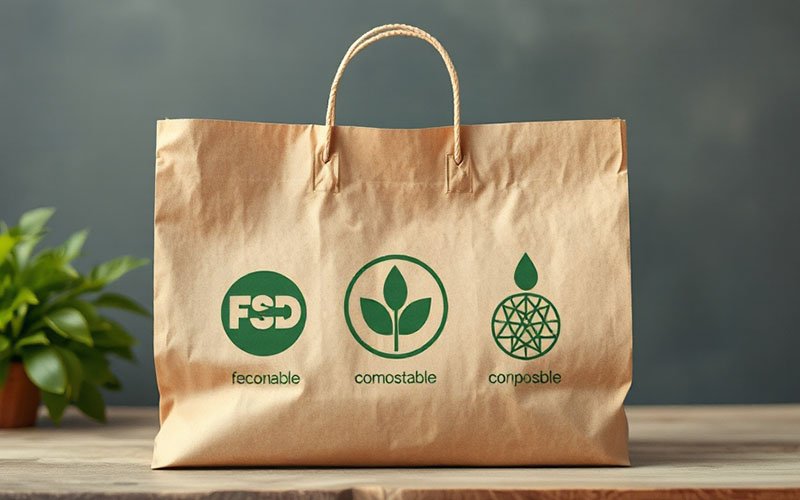
- FSC chain of custody – Supports eligible forest-based sourcing claims through the supply chain; check the certificate and product claim scope.
- PEFC chain of custody – Tracks eligible forest-based and recycled materials through the supply chain; verify the actual certificate and claim.
- OK compost INDUSTRIAL / EN 13432 – Check the finished-product certificate and industrial composting conditions; this does not establish home compostability or paper recyclability.
- USDA BioPreferred – For bio-based content, popular in the U.S.
- ISO 14001 – Environmental management systems certification
Request the current certificates that actually apply to the supplier, material, and ordered product. Do not assume that every label listed here is held by one supplier or covers every bag.
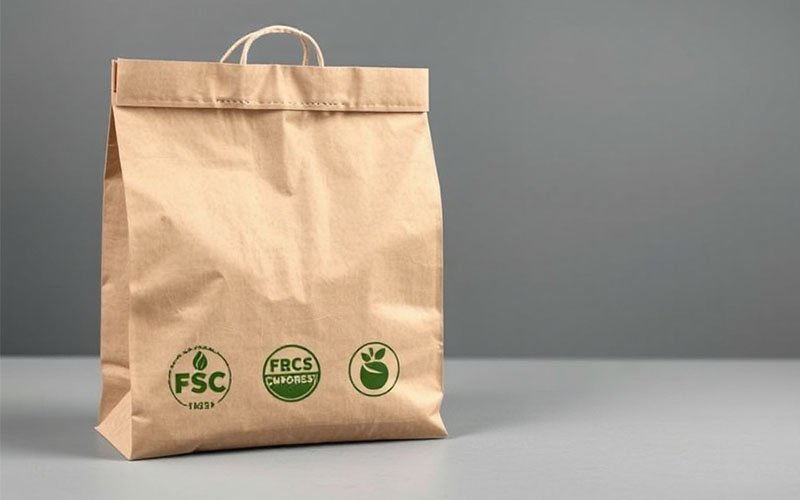
The Risk of Greenwashing Without Standards
Some suppliers put fake or vague eco labels on bags to attract buyers. But if those claims can’t be verified, it’s not eco-friendly—it’s greenwashing.
This can lead to brand embarrassment or even legal trouble.
At GreenWing, we provide certification IDs and third-party audit access for full transparency.
How Do These Standards Affect Product Design?
Eco-labeling affects:
- Material selection (FSC kraft, recycled paper)
- Printing methods (soy-based ink, water-based coatings)
- End-of-life (biodegradable, compostable, or recyclable)
We build every bag with these in mind. There’s no point in a compostable bag with a toxic ink.
How Retailers and Food Brands Benefit from Eco Labels
Brands like RELX and food chains love eco-labels for 3 reasons:
- Marketing: Green claims that actually hold up
- Compliance planning: Check destination-market rules separately; an environmental label does not guarantee import or product compliance.
- Consumer information: Use a clear, specific, verifiable claim rather than an unsupported promise about willingness to pay.
We even help clients print these logos cleanly and legally on their packaging.
How to Verify a Supplier’s Eco Claims
Here’s a quick checklist:
- Ask for current certification documents (not just logos)
- Verify ID codes with FSC or PEFC online tools
- Look for audit trails or testing results for compostability
- Ensure the whole bag is certified, not just part of it
If it sounds fishy, it probably is.
What About Cost? Are Certified Bags More Expensive?
A little—but not by much.
Request a current quote for the same size, paper grade, construction, quantity, and certification claim. Do not assume a fixed price premium for every certified or compostable bag.
And let’s be real: reprinting a batch after a greenwashing scandal is way more expensive.
Our Commitment to Verified Sustainability
We don’t just chase trends. Since 2008, our mission has been to combine manufacturing scale with eco responsibility.
Verify certificate numbers, validity, scope, and permitted logo use before printing a claim. ISO 14001 concerns an organization’s environmental management system; it is not a recyclability or compostability certificate for an individual bag.
Conclusion
Eco-labeling isn’t a sticker. It’s a promise. And with GreenWing, that promise is backed by data, science, and over a decade of trust. Let your bags carry your values—not just your products.
For material selection, compare eco-friendly paper-bag alternatives and verify the applicable claim on FSC-certified paper bags.