
Ever had a paper bag tear right when your customer steps out of the store?
I have. And trust me, it’s not just embarrassing—it damages your brand instantly.
Too thin, and it fails. Too thick, and you waste money.
Finding the right balance is where most buyers struggle.
Paper thickness directly affects the strength, load capacity, and durability of a paper bag. Thicker paper generally offers higher tear resistance and better structure, but it also increases cost and reduces flexibility. The key is choosing the right thickness based on product weight, usage scenario, and design structure—not simply going thicker for safety.
Stick with me. I’ll break this down the way I explain it to my own clients.
Why Paper Thickness Matters More Than You Think?
Let me be blunt.
Paper thickness is not just a technical detail. It’s the backbone of your packaging performance.
A bag that looks great but fails under weight? Useless.
On the flip side, an over-engineered bag eats into your profit margins.
I always tell my clients: durability is engineered, not guessed.
Understanding Paper Thickness (GSM Explained)
Before we go deeper, we need to speak the same language.
In our industry, we measure paper thickness using GSM (grams per square meter).
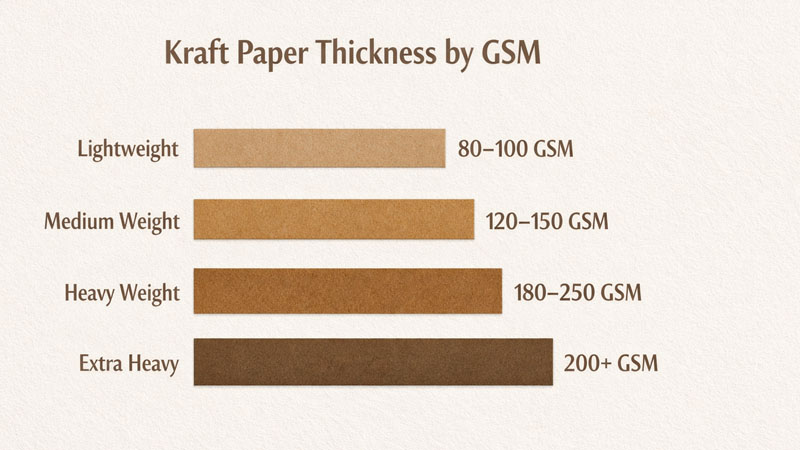
Here’s a quick reference I use daily:
- 80–100 GSM → Lightweight, used for small items
- 120–150 GSM → Medium strength, retail standard
- 180–250 GSM → Heavy-duty, premium packaging
Higher GSM = thicker and stronger paper.
But don’t fall into the trap—GSM alone doesn’t guarantee durability.
How Thickness Affects Load Capacity
This is where things get real.
The thicker the paper, the more weight it can carry. Simple, right?
Well… not entirely.
Load capacity depends on:
- Paper thickness
- Bag structure
- Handle type
- Glue strength
I’ve seen 150 GSM bags outperform 200 GSM ones—just because of better design.
Still, as a rule of thumb:
- 120 GSM → up to 3–5 kg
- 150 GSM → up to 6–8 kg
- 200+ GSM → 10 kg and above
But please, don’t rely on guesses. Always test.

Tear Resistance: The Real Durability Test
Here’s what most people ignore.
Durability is not just about holding weight—it’s about resisting tears.
Thicker paper fibers are more tightly packed.
This improves resistance to ripping, especially around handles and folds.
But here’s my insider tip:
Kraft paper (even thinner) often outperforms thicker coated paper in tear resistance.
Why? Fiber structure.
So again—material matters as much as thickness.

The Role of Bag Structure
Now we’re talking like professionals.
You can have the thickest paper in the world, but if your structure is weak, the bag will fail.
Key structural factors include:
- Square-bottom vs flat-bottom
- Reinforced base
- Fold precision
- Sykante
I always tell my clients: structure + thickness = true durability.
Not one without the other.
Handle Strength vs Paper Thickness
Let’s not forget the weakest point of any bag—the handle.
You can use 200 GSM paper, but if your handle attachment is poor, it will fail first.
Common handle types:
- Gedraaide papierhandvatsels
- Flat handles
- Rope handles
Thicker paper helps distribute stress better.
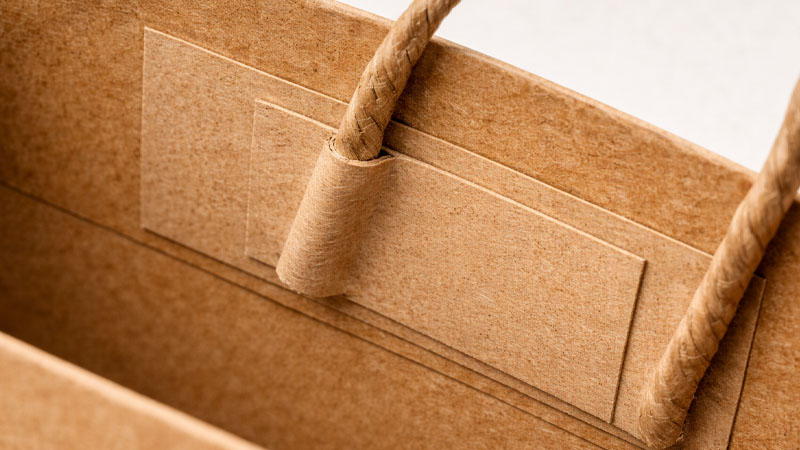
But reinforcement (like patches inside the bag) is what really saves the day.
I’ve seen luxury brands double-layer just the handle area. Smart move.
Cost Implications: Thicker Is Not Always Better
Here’s where I challenge many buyers.
“Let’s just go thicker to be safe.”
No. That’s lazy decision-making.
Thicker paper means:
- Higher material cost
- Increased shipping weight
- Reduced packing efficiency
If you scale to millions of bags, this becomes serious money.
My job is to help clients optimize—not overspend.
Matching Thickness to Application
This is where experience kicks in.
I always ask my clients one question:
“What exactly are you packing?”
Here’s how I usually guide them:
Voedselverpakking
- 80–120 GSM
- Lightweight, disposable
- Cost efficiency matters most
Retail (Clothing, Cosmetics)
- 120–180 GSM
- Balance between strength and appearance
Luxury Packaging
- 180–250 GSM
- Premium feel + durability
Heavy Products (Wine, Electronics)
- 200+ GSM with reinforced structure
No one-size-fits-all. Ever.
Omgewingsoorwegings
Now let’s talk sustainability.
Thicker paper = more material used.
That’s not always eco-friendly.
Many brands today are shifting toward optimized thickness instead of maximum thickness.
Using smarter design + better materials = less waste.
That’s how you win both cost and sustainability.
![eco friendly paper bags minimal material design]
Testing: The Only Truth That Matters
I don’t trust assumptions. I trust data.
At GreenWing, we test everything:
- Load testing
- Valtoetsing
- Handle pull tests
Because real-world performance is the only thing that counts.
If your supplier doesn’t offer testing? That’s a red flag.
Common Mistakes Buyers Make
Let me save you from expensive lessons.
I see these mistakes all the time:
- Choosing thickness without testing
- Ignoring bag structure
- Overpaying for unnecessary thickness
- Forgetting handle reinforcement
Durability is a system. Not a number.
Meer Verwante Vrae
Is higher GSM always better for durability?
No. It improves strength, but structure and material quality matter just as much.
What GSM is best for retail paper bags?
Usually 120–150 GSM works well for most retail applications.
Can thinner paper still be durable?
Yes. With good design and kraft material, thinner paper can perform very well.
How do I test paper bag strength?
Use load tests, drop tests, and handle pull tests to simulate real usage.
Afsluiting
Paper thickness matters—but it’s not everything.
The smartest buyers don’t choose the thickest option.
They choose the right one.
Balance strength, cost, and design—and your packaging will never let you down.